
Unveiling the Spectral Messages
Have you ever woken up in a cold sweat, the lingering image of a spectral figure etched in your mind? Dreaming about ghosts is an incredibly common, often unsettling, and profoundly symbolic experience. Far from being mere figments of an overactive imagination, these ghostly encounters in our slumber can offer profound insights into our waking lives, our subconscious fears, unresolved emotions, and even spiritual awakenings.
This article delves deep into the enigmatic world of ghost dream meanings, exploring the multifaceted interpretations that can help you decipher the hidden messages your subconscious is trying to convey. Prepare to embark on a journey that unravels the spectral veil, revealing the profound wisdom concealed within your nocturnal visitations.
Understanding these dreams can be a powerful tool for self-discovery and personal growth, offering a unique lens through which to examine your inner landscape. Many people seek to understand “what does it mean to dream about ghosts,” hoping to find clarity in these often-disturbing visions.
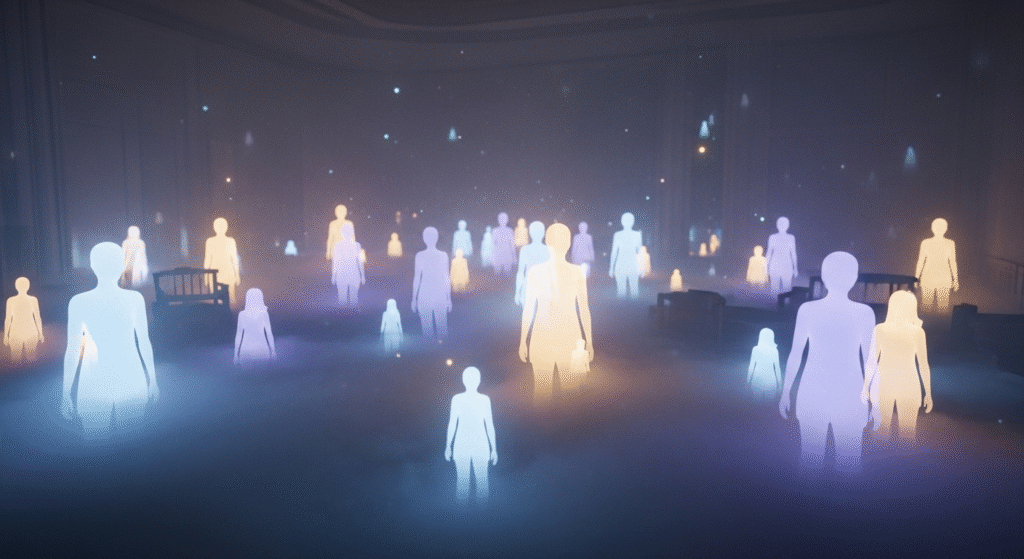
The Psychological Landscape of Ghost Dreams: Unmasking Unresolved Emotions
The human psyche is a complex tapestry, woven with threads of experience, emotion, and memory. When we delve into the psychological interpretations of ghost dreams, we often find ourselves confronting the very fabric of our being.
One of the most prevalent themes in dreaming about spirits is the representation of unresolved issues or emotions that linger from our past. These aren’t necessarily literal ghosts but rather metaphorical specters of guilt, regret, trauma, or unexpressed feelings that continue to haunt our subconscious.
Perhaps you’re grappling with a past conflict, a hurtful word left unsaid, or a decision that continues to weigh heavily on your mind. The ghost in your dream can be a vivid manifestation of this lingering emotional baggage, urging you to confront and process these feelings.
Dreams about ghosts can also symbolize feelings of being overwhelmed or burdened by responsibilities, feeling as though certain aspects of your life are beyond your control. This sense of powerlessness can manifest as a spectral presence that seems to dictate your actions or loom over your decisions.
Furthermore, dreaming of seeing ghosts can highlight feelings of anxiety or fear of the unknown. The ethereal nature of a ghost often reflects our own uncertainty about the future, our apprehension about significant life changes, or even a deep-seated fear of death and the afterlife. These dreams can act as a mirror, reflecting our innermost anxieties and prompting us to explore the sources of our unease.
The specific actions or appearance of the ghost in your dream can provide crucial clues. Is the ghost menacing, sad, silent, or trying to communicate? A menacing ghost might indicate feelings of being threatened or attacked in your waking life, while a sad ghost could point to your own suppressed grief or empathy for someone else’s sorrow.
Understanding these nuances is key to unlocking the true meaning behind your ghost encounters in dreams. Many individuals experiencing these visions often ask themselves, “what does it mean to dream about ghosts?” hoping to find answers to their subconscious worries.
Exploring the meaning of dreaming about ghosts can lead to significant self-awareness and emotional healing. The imagery in these dreams often serves as a powerful symbol of our internal state, guiding us towards introspection.
Another significant psychological aspect of ghost dream interpretations is the concept of suppressed memories. Our minds have an incredible capacity to store experiences, even those we consciously try to forget. A ghost in a dream might be a symbolic representation of a forgotten memory or a past event that is subconsciously resurfacing, demanding your attention.
This could be a traumatic experience, a lost relationship, or even a forgotten talent or passion that needs to be acknowledged and integrated into your present self. The spectral visitor can act as a messenger from your deepest subconscious, urging you to revisit these buried aspects of your past in order to achieve emotional integration and healing.
The feeling of being pursued by a ghost, for instance, could signify that these memories or emotions are actively trying to catch up with you, making it difficult to escape their influence. It’s important to consider the context of your personal life and current emotional state when analyzing ghost dream symbolism.
For many, trying to understand “what does it mean to dream about ghosts” is a quest to reconcile their past with their present. The appearance of a ghostly presence in dreams often signifies a need for psychological processing. Decoding ghost dreams can be an enlightening experience, revealing layers of personal history.
Lastly, the psychological framework suggests that dreams about spirits can also be a reflection of our relationships, both past and present. A ghost might represent a person who has passed away, and your subconscious is processing your grief, longing, or even unresolved issues with that individual.
However, the ghost doesn’t always have to be a deceased person. It could also symbolize someone currently in your life who is emotionally distant, unresponsive, or whose presence feels intangible and fleeting.
This could be a friend, a family member, or a romantic partner with whom you feel a lack of genuine connection. The dream might be a wake-up call, urging you to address these relational dynamics and seek deeper connections or establish clearer boundaries.
The specific interaction with the ghost—whether you’re running from it, talking to it, or simply observing it—can provide further clues about the nature of these relationships and the emotions associated with them. Seeking explanations for ghost dreams can illuminate these relational patterns. The recurring question of “what does it mean to dream about ghosts” often leads to profound personal realizations.
Spiritual and Metaphysical Dimensions of Ghost Dreams: Connecting with the Beyond
Beyond the realm of psychology, dreaming about ghosts often taps into deeper spiritual and metaphysical understandings. For many, these dreams are not just symbolic representations of inner turmoil but rather genuine encounters with the unseen world or messages from the spiritual plane.
Spiritual interpretations of ghost dreams suggest that these spectral figures could be manifestations of departed loved ones trying to communicate, offering guidance, comfort, or even warnings. It’s believed that in the dream state, our minds are more open and receptive to these subtle energies and communications from the other side. This can be a particularly comforting interpretation for those who have recently lost someone dear, as it offers a sense of continued connection and presence.
Dreaming of ghosts in this context can be a profoundly moving and reassuring experience, fostering a sense of peace and continuity. The quest to understand “what does it mean to dream about ghosts” often bridges psychological and spiritual insights.
Furthermore, ghost dreams can signify a spiritual awakening or a heightened sense of intuition. The appearance of a ghost might be an indication that your spiritual senses are becoming more attuned, that you are developing a deeper connection to the metaphysical world, or that you are on the cusp of a significant spiritual transformation. These dreams can be a call to explore your spiritual path more deeply, to engage in practices that foster inner peace and spiritual growth, or to pay closer attention to your intuitive nudges.
The ghost, in this light, acts as a spiritual guide or a beacon, illuminating a path towards greater self-awareness and spiritual enlightenment. Many who ask “what does it mean to dream about ghosts” are often seeking a deeper spiritual meaning. The symbolism of dreaming about ghosts often intertwines with spiritual journeys.
Another fascinating spiritual interpretation of dreaming about spirits revolves around ancestral connections. Our ancestors, even those we never knew, can have a profound impact on our lives, carrying forth legacies, traits, and even unresolved energies that can influence generations.
A ghost in your dream could be an ancestral spirit attempting to connect with you, to offer guidance, wisdom, or to highlight a familial pattern or unresolved issue that needs your attention. This could be an opportunity to explore your family history, to understand your roots more deeply, and to integrate the wisdom of your ancestors into your present life.
These dreams can be a powerful reminder of our interconnectedness with those who came before us, bridging the past with the present. Understanding ghost dreams can unlock insights into ancestral heritage. For those interested in supernatural dream interpretations, these dreams hold significant weight.
Moreover, ghost dreams can be a reflection of karmic lessons or past life echoes. Some spiritual beliefs posit that we carry experiences and lessons from previous incarnations into our current lives. A ghost in your dream might be a manifestation of a karmic debt, a past life trauma, or a lesson that needs to be learned or resolved in this lifetime. This can be a powerful opportunity for growth and healing, as it prompts you to examine recurring patterns in your life and to address any unresolved issues that might be holding you back.
These dreams can be a gentle nudge from the universe, guiding you towards understanding your spiritual journey and fulfilling your life’s purpose. The meaning of dreaming about ghosts often extends into these esoteric realms. Trying to figure out “what does it mean to dream about ghosts” can lead to profound self-discovery.
Finally, in a broader metaphysical sense, dreaming of ghosts can represent the subtle energies and unseen forces that permeate our reality. It acknowledges that there is more to existence than what meets the eye, and that our consciousness is capable of perceiving these subtle dimensions in the dream state.
These dreams can be an invitation to open your mind to possibilities beyond the purely material, to cultivate a sense of wonder and curiosity about the mysteries of the universe, and to explore the interconnectedness of all things.
Whether interpreted as a direct communication or a symbolic representation, these spiritual and metaphysical dimensions add a rich layer of meaning to the experience of ghostly visitations in dreams. The recurring question “what does it mean to dream about ghosts” truly opens up a world of interpretation.
Common Ghost Dream Scenarios and Their Interpretations: Decoding the Details
The specifics of your ghost dream are paramount in unraveling its true meaning. Not all ghost dreams are created equal, and the context, the ghost’s appearance, its actions, and your interaction with it all contribute to a nuanced interpretation. Let’s explore some common ghost dream scenarios and what they might signify. One frequently reported dream is dreaming of a friendly ghost.
Unlike menacing specters, a friendly ghost often symbolizes a comforting presence, a feeling of protection, or even a nostalgic longing for the past. It could represent a deceased loved one offering support or a lost aspect of your personality that you are beginning to embrace.
This type of dream usually evokes feelings of peace and reassurance, highlighting a positive connection to the spiritual realm or a sense of inner harmony. Understanding “what does it mean to dream about ghosts” often depends on these details.
Conversely, dreaming of a scary or menacing ghost is often indicative of unresolved fears, anxieties, or past traumas that are still haunting you. The ghost’s aggression might reflect feelings of being attacked, threatened, or overwhelmed in your waking life.
It could also symbolize guilt, regret, or a sense of being pursued by a consequence you are trying to avoid. The level of fear you experience in the dream is often a direct correlation to the intensity of these unresolved issues.
Confronting the ghost in the dream, even if scary, can be a sign of your subconscious urging you to face these fears head-on and reclaim your power. For many, this is the first kind of dream that prompts them to ask, “what does it mean to dream about ghosts?” These ghost visions in dreams can be quite unsettling.
Dreaming of a ghost talking to you is a powerful scenario. The message the ghost conveys, even if seemingly nonsensical, can hold significant meaning. Pay close attention to any words, phrases, or feelings associated with the communication. It could be a message from your subconscious, a spiritual guide, or even a deceased loved one trying to offer guidance or closure. Sometimes, the message isn’t verbal but conveyed through an emotional feeling or an intuitive nudge.
This type of dream often signals a need for communication in your waking life, either with others or with your own inner wisdom. The question “what does it mean to dream about ghosts” becomes more pointed when direct communication occurs. Interpreting ghost dreams requires careful attention to dialogue.
Dreaming of a ghost in your house can be particularly unsettling. Your house in a dream often symbolizes your self, your personal space, and your emotional state. A ghost in your house could signify that there are unresolved issues or lingering influences from your past that are impacting your present sense of security and well-being.
It could also represent a sense of vulnerability, feeling as though your personal boundaries are being invaded, or that there’s an unwelcome energy within your personal life. Identifying the specific room the ghost is in can also offer further clues about the area of your life that is being affected. For example, a ghost in the bedroom might relate to intimate relationships or personal fears.
The appearance of a ghostly presence in a dream within a familiar setting often carries deep personal meaning. This specific scenario frequently leads to people researching “what does it mean to dream about ghosts.”
Dreaming of being a ghost yourself is a unique and introspective experience. This dream can symbolize feelings of detachment, invisibility, or a sense of not being fully present in your own life. It might indicate that you feel overlooked, unheard, or that your contributions are not being recognized. Alternatively, it could signify a desire to escape from your current responsibilities or to shed aspects of your identity that no longer serve you.
This dream can be an invitation to explore your sense of self, your purpose, and your connection to the world around you. It pushes individuals to contemplate “what does it mean to dream about ghosts” from a very personal perspective. The meaning of dreaming about ghosts can be deeply personal and reflective.
Finally, dreaming of chasing a ghost or being chased by one represents different facets of confrontation and avoidance. If you are chasing a ghost, it might indicate your active pursuit of understanding or resolving an unresolved issue, a forgotten memory, or a lingering emotion. You are actively trying to confront what is haunting you.
Conversely, being chased by a ghost often symbolizes a feeling of being overwhelmed by past issues or fears that you are trying to escape. The ghost represents something from your past that is actively pursuing you, demanding your attention and resolution. The inability to escape or the feeling of being trapped can highlight a deep-seated fear of confronting these issues.
These detailed scenarios are crucial for anyone trying to decipher “what does it mean to dream about ghosts.” The diverse range of ghost dream interpretations underscores their psychological depth.
Cultural and Historical Perspectives on Ghost Dreams: Echoes Across Time
The concept of dreaming about ghosts is not a modern phenomenon; it is deeply embedded in human culture and history, echoing across civilizations and spiritual traditions for millennia. Throughout time, societies have grappled with the mysteries of death, the afterlife, and the subtle interactions between the living and the dead.
These enduring questions have inevitably shaped the interpretations of ghost dreams, imbuing them with rich cultural significance and symbolic weight. In many ancient cultures, dreams were considered direct messages from the divine, from ancestors, or from the spirit world.
Dreaming of spirits was often seen as a profound and sacred experience, requiring careful interpretation by shamans, priests, or dream interpreters. For instance, in ancient Egyptian beliefs, dreams were portals to the gods and the underworld, and a ghostly visitation could signify a message from a deceased Pharaoh or a divine warning.
The belief that dreams are not merely random neural firings but meaningful communications is a powerful thread running through human history. The persistent inquiry into “what does it mean to dream about ghosts” has ancient roots.
In various Indigenous cultures, ghost dreams are often understood as communications from ancestral spirits. These spirits are believed to offer guidance, wisdom, or warnings, playing an active role in the lives of their descendants.
The appearance of a ghost in a dream could be a call to remember one’s heritage, to honor one’s ancestors, or to address an imbalance within the community or family line. These dreams reinforce the interconnectedness of past, present, and future, emphasizing the enduring influence of those who came before us.
The respectful acknowledgment and interpretation of these ghostly encounters in dreams are vital for maintaining spiritual harmony and continuity within these societies. For these cultures, the question “what does it mean to dream about ghosts” carries profound communal and spiritual implications.
During medieval times in Europe, ghost dreams were often viewed through the lens of Christian theology. They could be interpreted as visitations from souls in Purgatory, seeking prayers for their release, or as temptations from demonic entities.
The nature of the ghost and the dreamer’s piety were crucial factors in these interpretations. A benevolent ghost might signify a saint offering guidance, while a malevolent one could be a spiritual attack.
These interpretations often fueled religious practices and fears, underscoring the powerful influence of prevailing spiritual beliefs on dream symbolism. The fear associated with dreaming of ghosts in these eras often drove people to seek spiritual solace and intervention.
The rise of psychoanalysis in the late 19th and early 20th centuries, particularly with figures like Sigmund Freud and Carl Jung, offered a new paradigm for understanding ghost dreams. While not dismissing cultural and spiritual aspects entirely, these theories emphasized the subconscious mind’s role in creating dream imagery.
Freud might interpret a ghost as a repressed desire or a manifestation of the Oedipus complex, while Jung would see it as an archetype of the “shadow” – the unconscious aspects of our personality we often deny or suppress.
These psychological approaches, though different from earlier spiritual ones, still recognized the profound significance of dreaming about spirits as windows into the human condition. This modern perspective significantly shaped the discussion around “what does it mean to dream about ghosts.”
Even in contemporary society, with its scientific advancements, the allure and mystery of ghost dreams persist. From popular culture portrayals to personal testimonials, the idea of spectral encounters in dreams continues to captivate and challenge our understanding of reality.
While some might dismiss them as mere physiological responses to stress or diet, many still seek deeper meaning, blending psychological insights with personal spiritual beliefs.
The search for “what does it mean to dream about ghosts” continues to evolve, incorporating diverse perspectives from ancient wisdom to modern psychology, proving that the human fascination with the unseen world remains as strong as ever. The diverse ghost dream symbolism reflects humanity’s varied beliefs.
Practical Steps for Interpreting Your Ghost Dreams: A Personal Guide
Deciphering the often-cryptic messages embedded within your ghost dreams requires a blend of self-awareness, careful observation, and a willingness to explore your inner landscape. While general interpretations offer a valuable starting point, the most profound insights always come from personal reflection. Here are some practical steps to help you on your journey of understanding ghost dreams. First and foremost, keep a dream journal.
This is perhaps the most crucial tool for anyone serious about dream interpretation. Immediately upon waking, before the details fade, record everything you remember about your ghost dream. Don’t censor yourself; write down emotions, colors, sounds, specific actions of the ghost, the setting, other people present, and any words or feelings that came to you.
The more detailed your account, the richer your material for interpretation. A dedicated practice of journaling can reveal recurring patterns and help you connect your dreams to your waking life experiences. Many who ask “what does it mean to dream about ghosts” find journaling to be an essential first step.
Next, reflect on your emotional state both within the dream and upon waking. How did the ghost make you feel in the dream – fear, sadness, comfort, confusion, anger? And how did you feel when you woke up? These emotions are powerful indicators of the dream’s underlying message. A dream about a scary ghost that leaves you feeling anxious in the morning likely points to unresolved fears or stress.
Conversely, a comforting ghost that leaves you feeling peaceful might signify a sense of spiritual guidance or closure. Connecting the dream’s emotional impact to your current waking life emotions can provide significant clarity on the meaning of dreaming about ghosts. Your emotional response is a key piece of the puzzle in decoding ghost dreams.
Consider the ghost’s appearance and behavior. Was it transparent or solid? Old or young? Male or female? Was it silent, speaking, or making gestures? Was it benevolent, malevolent, or neutral? Each of these details can offer clues. A transparent ghost might symbolize something intangible or fleeting in your life, while a solid one could represent a more concrete, undeniable issue.
A child ghost might point to lost innocence or aspects of your own childhood, whereas an elderly ghost could symbolize wisdom, ancestral ties, or fears about aging. Paying attention to these specifics will help you refine your ghost dream interpretation. For those trying to understand “what does it mean to dream about ghosts,” these details are incredibly important.
Examine your current waking life circumstances and challenges. Dreams rarely occur in a vacuum; they often reflect our daily experiences, our relationships, our work, and our personal struggles.
Are you going through a period of significant change, grief, conflict, or stress? Is there someone in your life who feels distant or unresolved? Is there a past event that you are still processing? By drawing connections between the themes in your ghost dream and your current life situation, you can often pinpoint the specific area that your subconscious is trying to address.
This contextual analysis is crucial for a truly personalized understanding of what your ghost dream means. Connecting your dream about a spirit to current events can be very insightful.
Finally, trust your intuition and personal associations. While dream dictionaries and interpretations can offer general guidance, your personal symbols and experiences are unique. What does the word “ghost” evoke for you? Does it remind you of a particular person, a past event, or a specific feeling? Sometimes, the most accurate interpretation comes from your gut feeling, that immediate sense of knowing.
If an interpretation resonates deeply with you, even if it deviates from common explanations, it’s likely the right one for you. Allow yourself the freedom to explore and experiment with different interpretations until you find one that truly fits your experience and offers a sense of insight or resolution.
Understanding ghost dream meanings is ultimately a personal journey of self-discovery. Don’t be afraid to meditate or reflect on the dream imagery to gain further clarity. The journey of understanding “what does it mean to dream about ghosts” is deeply personal.
Conclusion: Embracing the Messages of the Spectral Realm
Dreaming about ghosts is a profound and often transformative experience, a unique dialogue between your conscious and subconscious mind, and perhaps, even the spiritual realm. Far from being mere superstitions, these spectral visitations offer invaluable insights into our unresolved emotions, our deepest fears, our spiritual yearnings, and the subtle energies that shape our lives.
Whether you interpret your ghost dreams through a psychological lens, uncovering buried emotions and forgotten memories, or through a spiritual perspective, seeking messages from departed loved ones or ancestral spirits, the key lies in acknowledging their significance.
These dreams are not random; they are purposeful, serving as messengers that urge us to confront, heal, grow, and connect with aspects of ourselves and the world that often remain unseen in our waking lives.
By embracing a practice of dream journaling, reflecting on your emotional responses, meticulously examining the details of the ghost’s appearance and actions, and connecting these insights to your waking life experiences, you can unlock the powerful wisdom contained within these nocturnal encounters.
The journey of understanding ghost dreams is a journey of self-discovery, fostering greater self-awareness, emotional intelligence, and spiritual depth. So, the next time you wake from a dream featuring a spectral figure, instead of dismissing it as a mere fantasy, take a moment to reflect.
Ask yourself: “what does it mean to dream about ghosts in this specific context for me?” and listen closely to the whispers of your subconscious. These ethereal visitors are not there to haunt you, but to guide you towards greater understanding, healing, and personal evolution. Exploring ghost dream meanings can truly transform your perspective.
FAQ: Your Burning Questions About Ghost Dreams Answered
Q1: Is dreaming about ghosts always a negative sign?
A1: Not at all! While many people associate ghosts with fear or negativity, dreaming about ghosts can have a wide range of meanings, many of which are positive or neutral. A ghost might represent unresolved issues, yes, but it could also symbolize guidance from a deceased loved one, a call to address forgotten aspects of yourself, a spiritual awakening, or even a sense of comfort and protection.
The interpretation largely depends on the specific details of the dream and your emotional response to it. Your feelings within the dream and upon waking are key to discerning if it’s a positive, negative, or transformative message.
Q2: Can dreaming about a ghost mean a deceased loved one is trying to communicate?
A2: Yes, for many people, dreaming of seeing ghosts is interpreted as a genuine communication from a deceased loved one.
In the dream state, our minds are often more open and receptive to subtle energies. If the ghost in your dream is familiar, comforting, or conveys a message that resonates with your relationship with that person, it’s highly possible they are trying to connect, offer comfort, or provide guidance. Trust your intuition in these instances, as personal connection is often the strongest indicator.
Q3: What if I keep dreaming about the same ghost repeatedly?
A3: Recurring dreams about ghosts are a strong indication that there is an unresolved issue or a persistent message that your subconscious is trying to bring to your attention. This could be a recurring fear, a traumatic memory, a relationship dynamic that needs addressing, or a spiritual lesson that you haven’t fully integrated. Keeping a detailed dream journal and actively reflecting on your waking life circumstances can help you pinpoint the source of this persistent dream theme and work towards resolution.
Q4: Does dreaming about a ghost mean I’m going to die or that someone I know will die?
A4: Generally, dreaming about ghosts does not literally predict death. While such dreams can certainly evoke fears of mortality, their meaning is almost always symbolic.
They typically reflect psychological processes, emotional states, unresolved issues, or spiritual insights related to life transitions, endings, new beginnings, or fears of loss, rather than a direct premonition of death. It’s important to differentiate between literal interpretation and symbolic meaning in dreams.
Q5: Should I be afraid if I dream about a ghost?
A5: While it’s natural to feel fear during a ghost dream, try to approach the experience with curiosity rather than dread upon waking. The fear itself can be a significant clue about what your subconscious is trying to communicate (e.g., fear of the unknown, fear of confronting past issues).
Remember that the ghost is likely a symbol of something within your own psyche or life. By understanding its symbolic meaning, you can often alleviate the fear and transform the dream into a powerful tool for self-awareness and personal growth. The act of confronting the symbolism in the dream can be empowering.

I’m Marisa Silva—an intuitive dream researcher fascinated by the symbolic power each dream image can carry.
Since I was little, I’ve realized that dreams are much more than simple nocturnal memories: they are messages from the unconscious, signs from the universe, and reflections of our soul.
At deepdreamss.com, I share interpretations, reflections, and guidance so you can decipher your own dreams and reconnect with your inner wisdom.


